Where it gets more nuanced is maintenance. Both types need occasional sealing, but stamped concrete needs it more frequently — roughly every two to three years — to protect the color and surface finish from UV fading, moisture, and wear. If you skip resealing on a stamped surface, the color dulls and the pattern starts to look tired faster than plain concrete would. Regular concrete is more forgiving on the maintenance side; it may not be as pretty, but it doesn't need the same level of ongoing attention to stay functional.
Durability is roughly comparable when both are properly installed and maintained. Stamped concrete actually benefits from the sealant layer in some ways, since it adds protection against water penetration and surface wear. The one area where regular concrete tends to hold up better is extremely high-traffic or heavy-load applications — large commercial parking areas, for instance, where plain concrete's simpler surface is more practical and cost-effective at scale. For residential use, both will typically last 25 to 30 years with decent care.
So when is stamped concrete genuinely worth it? The clearest cases are outdoor living spaces where appearance drives the experience — a backyard patio where you're entertaining, a pool deck that you want to look intentional and polished, a front walkway that sets the tone for curb appeal. In those situations, stamped concrete gives you the look of natural stone or brick at a fraction of what those materials would actually cost. Natural stone can run two to three times the price of stamped concrete for the same area, so in that comparison, stamped concrete is actually the budget-friendly option.
It's a harder sell for purely functional surfaces. A side driveway you never really look at, a utility path behind the garage, a basic slab under a shed — those are jobs where the visual payoff of stamped concrete doesn't justify the premium and regular concrete does everything you need at a lower cost with less ongoing upkeep.
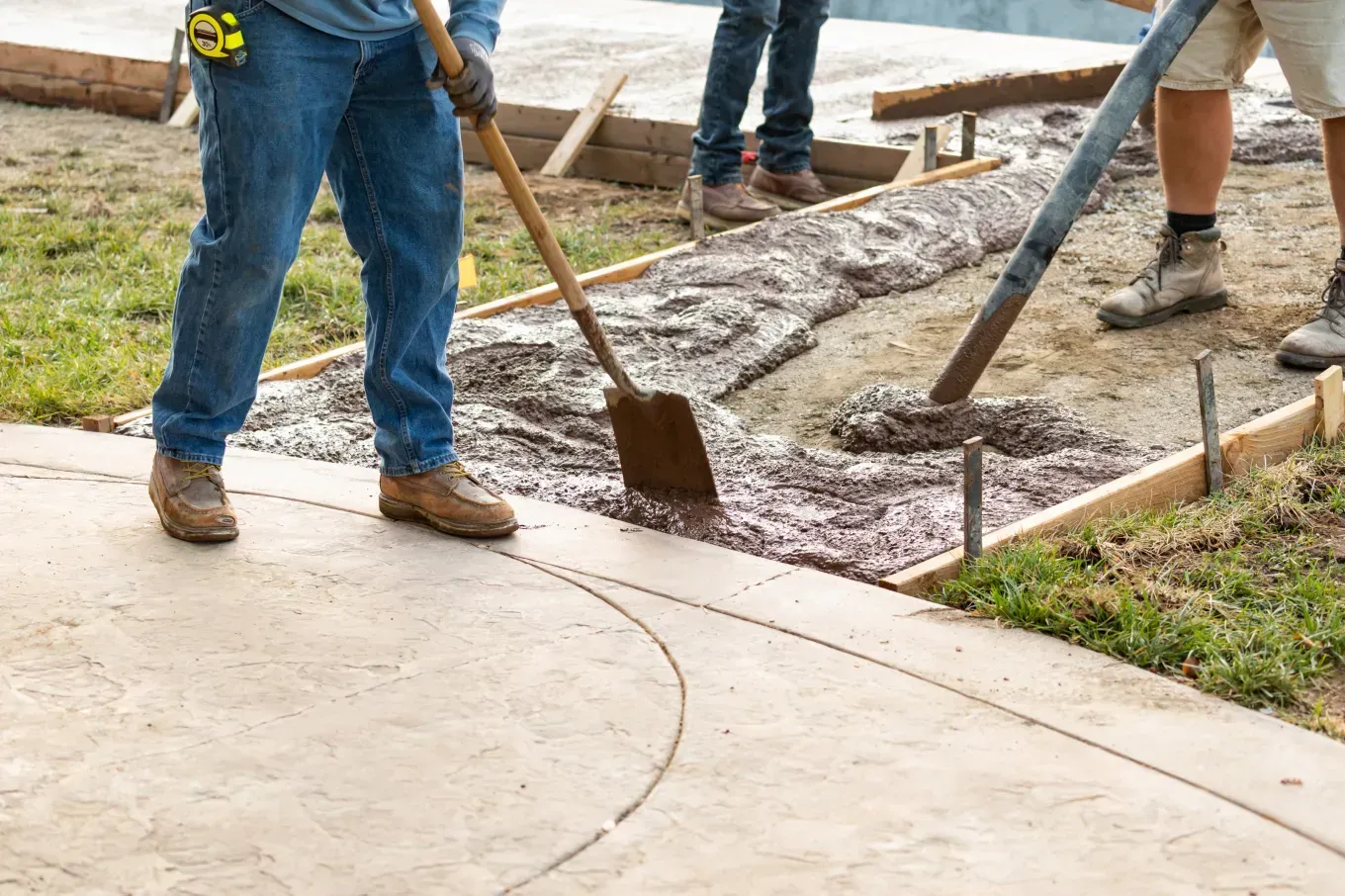
The question of whether stamped concrete vs regular concrete is worth it also comes down to your contractor. Stamped concrete is significantly more skill-dependent than a standard pour. The stamping has to happen within a precise window of time while the concrete is at the right consistency, and the coloring needs to be applied evenly. A bad stamped concrete job looks worse than a plain slab. Vetting your contractor's previous work is not optional — ask to see photos of completed projects and check reviews specifically for decorative concrete work.
If the space is visible, heavily used for outdoor living, and you're planning to stay in the home for a reasonable stretch of time, stamped concrete is worth the investment. If you just need a solid, durable surface that does its job without demanding attention, regular concrete is an entirely sensible choice. Neither answer is wrong — it just depends on what you're actually trying to accomplish.